Carnival on La Palma is one of the island’s most joyful and colorful celebrations and a true highlight of the cultural calendar. Every winter, usually in February, the capital Santa Cruz de La Palma comes alive – not only with costumes, music and dancing, but with a very special tradition that makes La Palma’s carnival unique among the Canary Islands.
When does Carnival take place?
In 2026, the main carnival celebrations reach their peak on Monday, February 16, known as the famous Día de Los Indianos. In the days leading up to it, many towns across the island already celebrate with parades, music and local festivities.
Los Indianos – the white carnival
The most iconic and distinctive event of La Palma’s carnival is Los Indianos, celebrated every year on Carnival Monday. Unlike classic carnival parades, this celebration is rooted in the island’s history.
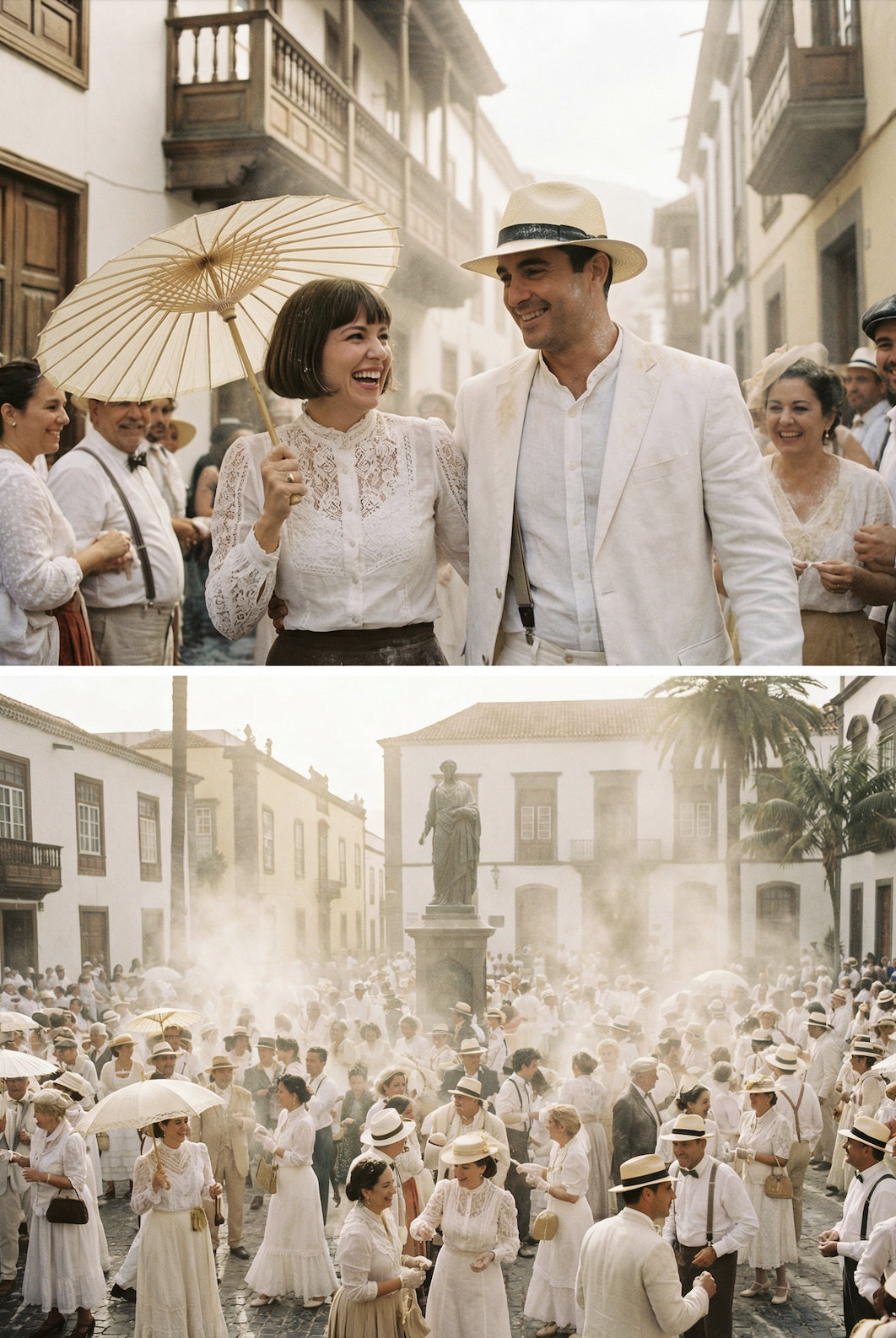
Los Indianos commemorates the return of Palmeros who emigrated to Cuba and Latin America centuries ago and later came back wealthy, bringing new habits, music and stories with them. Participants traditionally dress entirely in white, evoking elegance, nostalgia and a touch of irony.
The highlight of the day is the legendary talcum powder celebration: from the morning onwards, the streets of Santa Cruz fill with white-clad revelers, Cuban music plays everywhere, and clouds of white powder float through the air. By the end of the day, almost everyone – and everything – is covered in white.
Traditions & highlights
-
Los Indianitos: On the Sunday before Carnival Monday, children take center stage with parades and family-friendly festivities.
-
Día de Los Indianos: The main event on Carnival Monday, when Santa Cruz turns into a sea of white, music and laughter.
-
Music & dancing: Cuban and Caribbean rhythms such as salsa fill plazas and streets, encouraging spontaneous dancing.
-
Costumes & accessories: White clothing, straw hats, sunglasses – and often a mojito or rum in hand – complete the look.
Carnival on La Palma vs. other Canary Islands
Carnival is celebrated across the Canary Islands, but each island has its own character:
-
Tenerife is famous for its spectacular parades, elaborate costumes and one of Europe’s largest carnival celebrations.
-
Gran Canaria offers colorful shows, drag queen galas and grand processions.
-
La Palma, however, stands out with Los Indianos, a celebration rooted in history, humor and community rather than extravagance.
Conclusion – why La Palma’s carnival is special
Carnival on La Palma is more than a party – it is a living expression of history, identity and shared joy. Los Indianos, with its white costumes, powder-filled air and Cuban rhythms, creates a unique atmosphere that brings locals and visitors together in a truly unforgettable way.